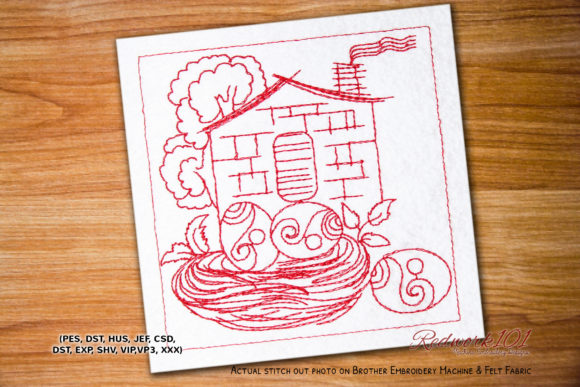
Easter Egg Home Design Review
A First Look at the Visual Language
When I first opened the Easter Egg Home Design file, I was immediately drawn to its whimsical yet refined aesthetic. The design carries a light-hearted mood, perfect for seasonal or holiday-themed embroidery projects. The central motif of an Easter egg is rendered with clean lines and a soft, approachable shape that feels both playful and elegant. It’s not overly busy, which makes it versatile for a range of applications.
The layout is centered around a box stitch option, though it's noted as optional. This gives the designer flexibility—whether you want to emphasize the box or let the egg take center stage. The color of the outer box varies in most designs, allowing for creative customization. If the box isn’t part of the main design, it can be skipped entirely, which is a thoughtful feature for those who prefer a more minimalist look.
Real-World Performance in Embroidery Projects
As someone who regularly works on custom apparel and handmade products, I tested Easter Egg Home Design on a few different surfaces. On a medium-weight cotton tote bag, the design stitched cleanly with minimal distortion. The stitch density was balanced—enough to give definition without overwhelming the fabric. For a baby onesie, the design scaled well, maintaining clarity even when reduced in size.
I also tried it on a felt patch for a custom apron. The satin stitch along the edges gave a polished finish, while the fill stitches inside the egg maintained their shape beautifully. This makes it ideal for embroidered patches, tote bags, and even nursery decor items like pillow covers or wall hangings.
For commercial embroidery, this design could work well as part of a seasonal collection, especially for Etsy sellers or small shop owners looking to offer personalized gifts. Its subtle charm would appeal to customers seeking something unique but not too loud.
Where to Use with Caution
While Easter Egg Home Design is quite adaptable, there are a few scenarios where extra care should be taken. On stretchy fabrics like knits or t-shirts, I recommend using a stabilizer to prevent puckering. Similarly, if you're planning to use it on dark-colored fabrics, make sure the thread colors have enough contrast to stand out.
Small hoop sizes might challenge the details, particularly if the box stitch is included. Testing on scrap fabric first is always a good idea, especially if you’re working with intricate corners or tiny lettering. Also, avoid using this design on very thin or textured fabrics unless you’ve tested it thoroughly.
Design Impact and Practical Considerations
The visual appeal of Easter Egg Home Design lies in its simplicity and versatility. It adds a touch of celebration without being over-the-top, making it suitable for both personal and commercial embroidery projects. Whether you're creating a holiday gift, a boutique product, or a digital embroidery file for resale, this design has the potential to enhance your finished product.
Stitching clarity is another strong point. The design doesn’t rely on complex patterns, so it maintains its integrity across different materials and techniques. This makes it a great choice for beginners and professionals alike. When used in a handmade product, it contributes to a sense of professionalism and attention to detail.
For craft businesses and Etsy sellers, having a design that can be easily adapted to various backgrounds and formats is a major plus. You can pair it with other seasonal motifs or use it as a standalone piece in a printable mockup or digital product preview.
Embroidery Designer Notes and Tips
If you're considering using Easter Egg Home Design, here are a few practical tips to keep in mind:
- Test on scrap fabric: Always do a test run before committing to a final product. This helps catch any issues with stitch density or color contrast.
- Check thread color contrast: Especially important if you're using it on dark fabrics. Ensure the colors pop without overpowering the design.
- Review stitch density: Adjust if necessary to match your fabric type and desired look.
- Confirm hoop size: Make sure your hoop can accommodate the design, especially if the box stitch is included.
- Inspect small details: If the design includes tiny elements, ensure they stitch clearly.
- Use proper stabilizer: Especially on stretchy or thin fabrics to maintain shape and prevent distortion.
- Check licensing: Before selling finished items or digital products, confirm whether the design allows for commercial use.
Whether you're crafting a personalized gift, designing for a small shop, or building a line of holiday merchandise, Easter Egg Home Design offers a solid foundation. Its adaptability, clarity, and charming aesthetic make it a valuable addition to any embroidery project or portfolio.